

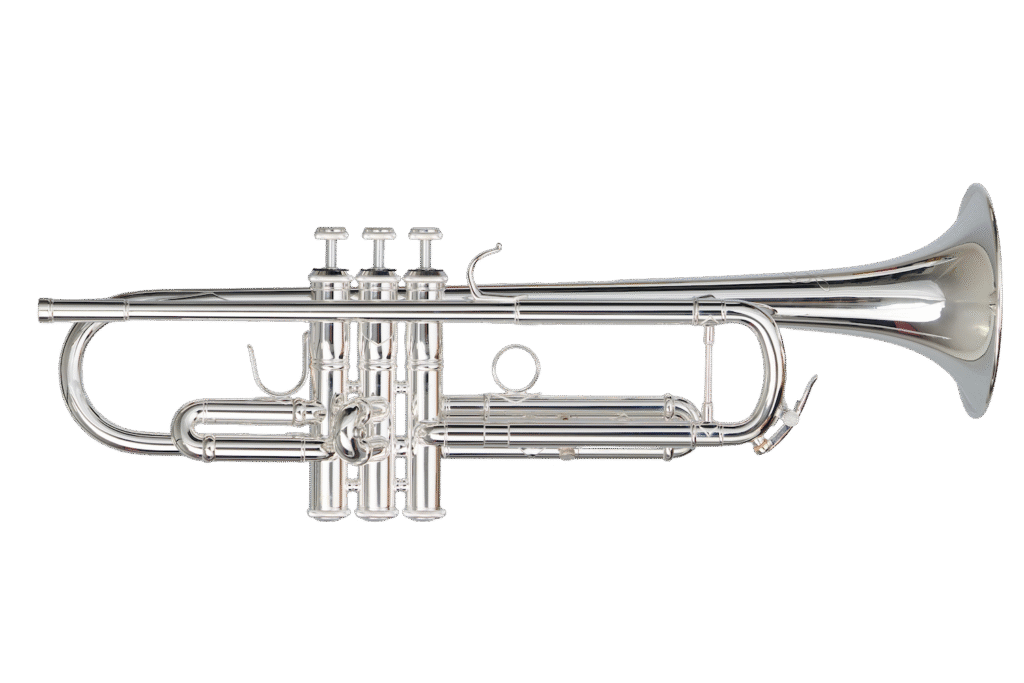
A Brief History of the Trumpet from Ancient Horns to Modern Music
The trumpet, a brass instrument renowned for its powerful and vibrant sound, boasts a rich history that spans millennia. It has evolved dramatically from basic animal horns to the sophisticated instruments we recognize today. This essay explores the timeline of the trumpet’s development, highlighting key periods, technological advancements, and its influence on music and culture. The trumpet’s ancestors emerged in ancient civilizations, crafted from natural materials like animal horns, conch shells, and hollowed wood. The shofar of ancient Israel, made from a ram’s horn, was significant in religious and ceremonial contexts. Similarly, the salpinx of ancient Greece and the tuba of ancient Rome were straight, valveless instruments used for military signals and public announcements. Medieval and Renaissance Developments n the Medieval period, the trumpet began taking more recognizable forms. The buccina, a medieval trumpet, was often made of metal and featured a long, straight tube. As Europe transitioned into the Renaissance, significant changes occurred. Instrument makers experimented with coiled designs, leading to the creation of the natural trumpet. This instrument, recognized for its long tubing bent into a spiral or loop and clear tone, became prominent in court music, ceremonial events, and early orchestral settings. The Golden Age of the Trumpet The Baroque period (1600-1750) is considered the golden age of the natural trumpet. During this era, its range and capabilities expanded due to craftsmanship advancements. Clarino playing, a technique for playing in the trumpet’s higher register, allowed for more melodic versatility. Composers like Johann Sebastian Bach and George Frideric Handel wrote intricate trumpet parts, enhancing the instrument’s role in music. In the Classical period (1750-1820), trumpet design saw further innovations. Anton Weidinger developed the keyed trumpet, allowing greater chromatics and intonation precision. Haydn’s Trumpet Concerto in E-flat major, composed for Weidinger, showcases the enhanced range and expressive potential of this new design. A major milestone came in the early 19th century with the invention of the valve. In 1818, Heinrich Stölzel and Friedrich Blühmel independently developed the valve system, enabling musicians to easily play a full chromatic scale. Valves, small cylinders that modify the instrument’s tubing length when pressed, allowed for a complete range of notes without complex techniques. This innovation led to the modern valve trumpet, quickly becoming a staple in orchestras, military bands, and jazz ensembles. During the Romantic period (1820-1910), the valve trumpet became integral to symphonic and operatic music. Composers like Richard Wagner, Pyotr Ilyich Tchaikovsky, and Gustav Mahler wrote extensive trumpet parts to leverage the instrument’s dynamic and expressive capabilities. The valve trumpet also excelled in solo performances, with virtuosos like Arban and Herbert L. Clarke pushing the instrument’s technical boundaries. In the early 20th century, the trumpet played a pivotal role in jazz’s emergence, reshaping modern music. Its bright timbre complemented jazz’s lively, improvisational style. Pioneers like Louis Armstrong revolutionized trumpet playing with innovative techniques and charismatic performances, setting new standards and inspiring future generations. During the swing era of the 1930s and 1940s, bandleaders like Duke Ellington and Count Basie featured standout trumpet soloists such as Cootie Williams and Harry “Sweets” Edison. Dizzy Gillespie, a key figure in bebop’s development, introduced complex harmonic progressions and rapid improvisation, adding new dimensions to jazz music. In the latter half of the 20th century, the trumpet maintained its versatility in both classical and contemporary music. Composers like Igor Stravinsky and Steve Reich incorporated the trumpet’s bold sound. Outstanding trumpeters such as Maurice André and Håkan Hardenberger renewed interest in classical repertoires through their brilliant performances. In contemporary music, the trumpet features across genres including rock, pop, and experimental music. Artists like Miles Davis expanded the trumpet’s role beyond traditional jazz, exploring fusion, funk, and ambient music. Davis’s albums, “Kind of Blue” and “Bitches Brew,” showcased the trumpet’s innovative potential in music. Modern techniques continue to improve trumpet manufacturing, offering superior intonation, durability, and personalized options for players. Digital advancements have increased the trumpet’s expressive range. Electronic and synth trumpets, equipped with sensors and sound modifiers, offer opportunities for new experimentation, blending traditional acoustics with electronic effects. The trumpet has left a profound impact on music and culture. Historically, trumpet players have become iconic for their artistry. Figures like Louis Armstrong and Miles Davis are especially revered for their innovative playing and influence. Contemporary trumpeters such as Wynton Marsalis and Alison Balsom continue to bridge classical, jazz, and modern music, inspiring new generations. The trumpet’s history is a testament to human innovation and music’s enduring power. From a simple signaling device to a versatile instrument, the trumpet’s evolution is remarkable. Its vibrant sound has inspired and captivated audiences across eras and promises to remain influential in future music.