

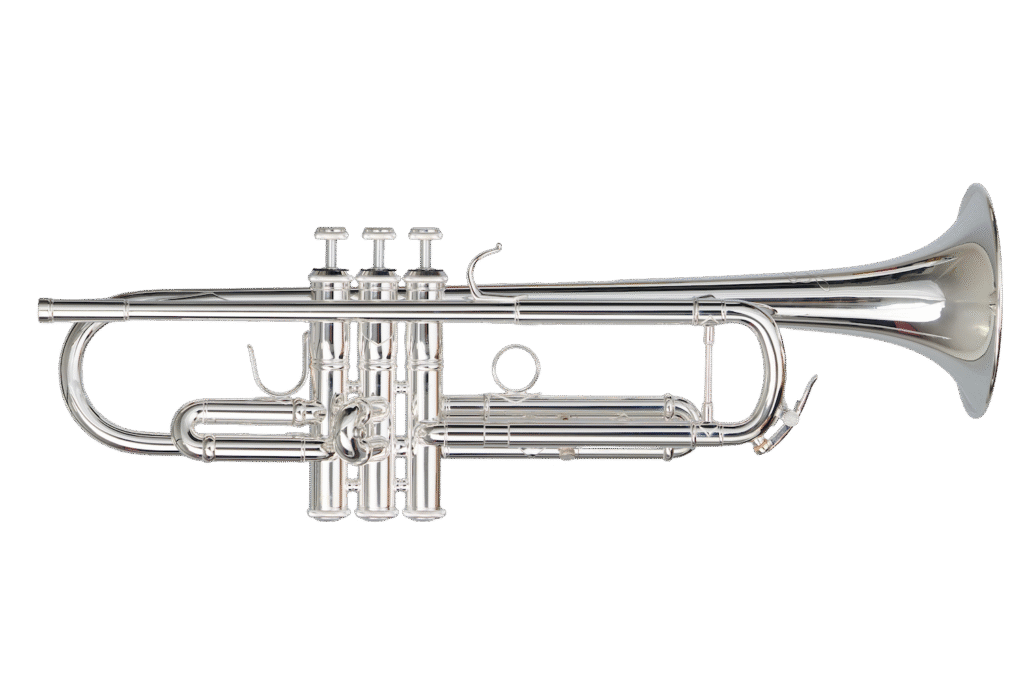
Five Core Skills for Successful Trumpet Auditions
Obtaining a coveted position into music school or winning a professional job has many of the qualities that make a good movie. You stand, heart pounding, behind a closed door listening to the sounds of your opponent. The door opens, you enter and nervously play for the tall, graying gentleman seated behind the table. You return home and wait for the owl to deliver your fate through the open window … or the mailbox. As impregnable as that coveted college audition or orchestra job may seem, you should know that playing a great audition comes down to some extremely simple skills. True professionals have mastery over five elements: 1) Sound, 2) Intonation, 3) Articulation, 4) Rhythm, and 5) Style. 1. Sound While music may express that which cannot be said, Victor Hugo would be the first to agree that words are useful to talk about what makes a high-quality musical sound. Adjectives such as resonant or dull, focused or diffuse, and bright (shrill) or warm can help us to perceive with a more discerning ear. For most playing situations, the ideal sound is resonant, focused, and has a pleasing balance of brightness and warmth. Resonance on a brass instrument isn’t about working hard or playing louder. On the contrary, it has a lot to do with keeping the embouchure relaxed so it can vibrate as freely as possible, producing a fuller sound with less air. Intonation comes into play, as well. A perfectly tuned note amplifies all of the available overtones on the instrument, creating a sound that is both warm and brilliant. Use lip bends and lyrical etudes (played slowly) to practice centering your pitches, working toward being able to play every note on center without adjustment. As your embouchure strengthens you will be able to produce a sound quality that’s not possible in your first few years of playing. During these years, don’t blame your equipment or yourself; strengthen your embouchure, and your sound will gradually acquire fullness and body. Use the long tones in Schlossberg’s Daily Drill and Technical Studies to train you in correct breathing, steady airflow, and lip position. Practice the exercises using mouthpiece buzzing as well as on the trumpet. When mouthpiece buzzing, strive to achieve a gentle, easy-sounding buzz and a constant airflow. 2. Intonation Take the time to make sure every note is perfectly centered, even if that means playing each and every note on the page one at a time. A tuner is a musician’s best friend; there is no substitute for its honesty! Keep it on the music stand and turned on, and check it frequently. Be sure you are playing with sufficient air and that your embouchure isn’t too tight or loose. These embouchure problems can make it almost impossible for you to achieve any kind of accuracy or consistency in your intonation. If you are still having trouble playing a given melody in tune, put down your trumpet and sing the phrase with a tuner (or piano keyboard) to reveal any interval that you are hearing incorrectly. Once your internal musical model is corrected and you can sing the melody accurately, you will discover you can easily and reliably locate these notes on the instrument. As an advanced player, not only will you need to play each note in tune, but you will also need to harmonize with others, requiring you to adjust some notes slightly higher or lower than usual to match the surrounding harmony. For example, your E will need to be 14 cents lower to harmonize with a C (a major third). In practice, when you’re harmonizing with others, you’ll need to use your ear, not the tuner. However, you can experiment with a friend using the chart below to train your ear to accurately hear these common harmonies. Interval Example Adjust Higher Note (in Cents) Minor Third C to Eb +16 Major Third C to E -14 Perfect Fourth C to F -2 Perfect Fifth C to G +2 Minor Sixth C to Ab +16 Major Sixth C to A -16 3. Articulation Articulations lend definition and character to the piece you’re playing. They must be intentional, clear, accurate, and well-suited to the given passage. Your listeners shouldn’t wonder if your notes were legato or staccato! To refine your articulation, practice Clarke’s Technical Studies using the same articulation for an entire exercise at a time – whether that is legato, marcato, staccato, or accented. Be sure the tongue always hits the same place to give the exact same sound to each note. Slow, diligent practice will enable you to hear what exactly you need. Listen carefully to what you are doing; when you can hear your own inaccuracies, you can fix them easily. To attain the highest rank as trumpeter, you will need flawlessly consistent articulation. 4. Rhythm Rhythmic irregularities are just as noticeable as out-of-tune notes! When performing, perfect rhythm is a must. Make sure you understand the rhythm – how it lines up with both the beat, as well as how it is subdivided within the beat. This may require intellectual effort! Take the time to sit down and do the math. Mark with a pencil where the beats fall; then turn on the metronome and speak the rhythm out loud, making sure that the clicks you hear occur in the same places as the ones you’ve marked. Next, play the rhythm on the trumpet with the metronome, but on a single note. Finally, add the correct notes. Work daily with the metronome to keep your tempo steady and help clarify your understanding of the rhythm. While it’s useful to train yourself to keep the beat with your feet or toes (this requires feeling the beat internally), there is also no substitute for the unerring accuracy of a metronome. To get the best of both worlds, it’s a good exercise to play the passage while tapping your foot, with the metronome on. If you don’t already own a metronome, you can