

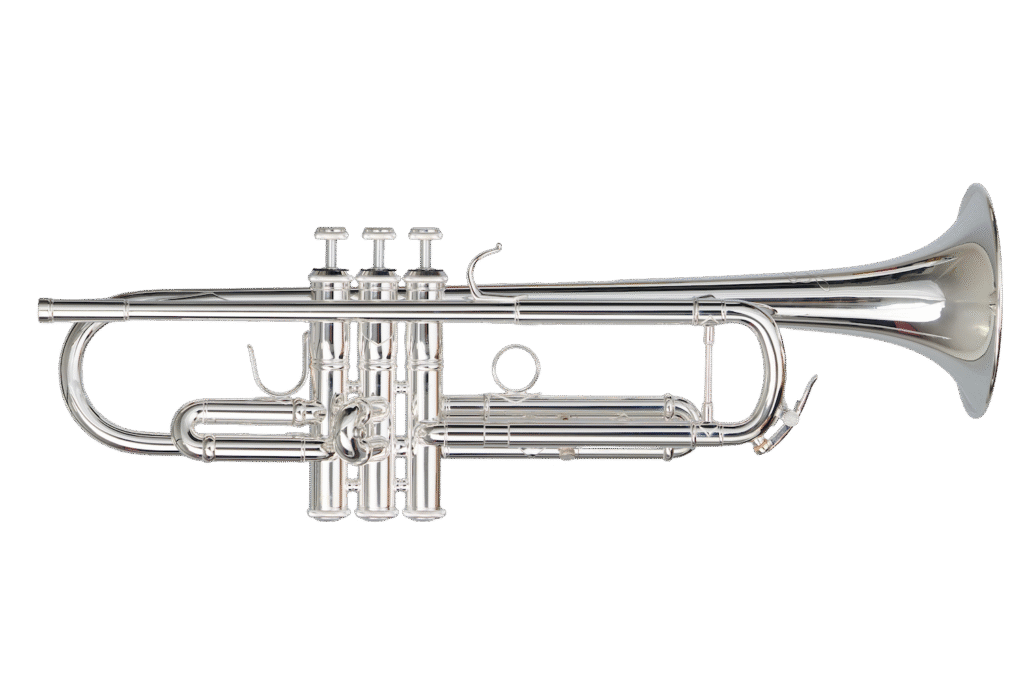
Developing Double and Triple Tonguing on Trumpet
Articulation is what gives definition to the notes of a musical phrase. As in painting, the edges of the notes can be sharp and well-defined or they may have a softer edge. Good musicians consciously the articulation style for a particular passage; any variation in the articulation will be intentional rather than the result of inconsistent technique. Single Tonguing As you are probably already aware, single tonguing is used when the notes are in a slow enough tempo that the tip of the tongue has time to return to the hard palate (roof of the mouth, toward the front) for each new note, resulting in “tou tou tou tou tou tou.” As notes become faster than the students will be able to single tongue, your students will alternate “tou” with “kou.” This alternation is called multiple tonguing. You may be familiar with method books that spell the tonguing syllables “tu” and “ku.” The most popular pedagogical source of these syllables was a book written by Jean Baptist Arban, a Frenchman. For this reason, the pronunciation of these syllables should be understood in that language, and they should rhyme with “Boo!” This article will spell them “tou” and “kou” to emphasize the correct pronunciation. The “tou” and “kou” syllables facilitate a quicker double and triple tongue than American approximation “tuh” and “kuh.” The pure “tou” is pronounced more towards the front of the mouth, while “kuh” is pronounced in the back of the mouth. The efficiency of the “tou” will create a smoother, quicker articulation for your students. Try having your trumpeters pronounce “tou tou tou tou tou” out loud, keeping a seamless, steady sound. Have them keep the air flow constant – the tongue simply intersects the airflow to create the articulation at the beginning of the note. The tongue never stops the air; it merely interrupts a continuous airflow. Now have them try the same thing with “kou.” They should use the very tip of their tongue to pronounce “tou,” and the front middle portion to pronounce “kou.” Once they have practiced these syllables out loud to a high level of consistency, have them try the same thing on their trumpet. Multiple tonguing Once your students have established a fast and consistent single-tonguing on both syllables, they are ready to begin multiple tonguing. You will actually have them start with triple tonguing, since this doesn’t require them to switch between “tou” and “kou” on every single note. Once they get a firm grasp of how to triple tongue “Tou-Tou-Kou”, they will then be better equipped to handle the rapid alternation of the “Tou-Kou” in double tonguing. Triple tonguing combines the syllables of double tonguing in a three-note pattern. If triple tonguing has already been established, double tonguing will be much easier – you simple have to drop a syllable. Like single tonguing, multiple tonguing must be practiced slowly and carefully, so that they have good control at every speed. In multiple tonguing, “kou” is the weakest syllable, simply because they’ve been using “tou” since their beginning days. Now that they’ve learning multiple tonguing, practice articulating slow passages using only the “kou.” The goal is to make the “kou” sound identical to “tou.” Once they feel comfortable with this articulation, have them add the “tou” and “kou” together slowly. Have them gradually increase the speed, varying the dynamic as well so their tonguing is flexible. Multiple tonguing is a rapid reflection of their single tongue. If your students don’t have a rapid single-tongue, their multiple tongue won’t be fast enough either. Etude books that focus specifically on tonguing: 1. Arban, J. B. Complete Conservatory Method. Colin, 1981 2. Goldman E. F. Exercises for Double and Triple Tonguing. Carl Fischer, 1912 3. Hering, S. Double and Triple Tonguing. Carl Fischer, 2004 4. Goldman, E. F. Practical Studies for Trumpet. Carl Fischer, 1921 5. Vizzutti,A. Trumpet Method (Book I). Alfred Publishing Company, 1991 6. Irons, Earl. Twenty-Seven Groups of Exercises. Southern Music Company, 1977 7. Charlier, Theo. Thirty Six Etudes Transcendates. Leduc, 1946. – etudes #16 and #18.