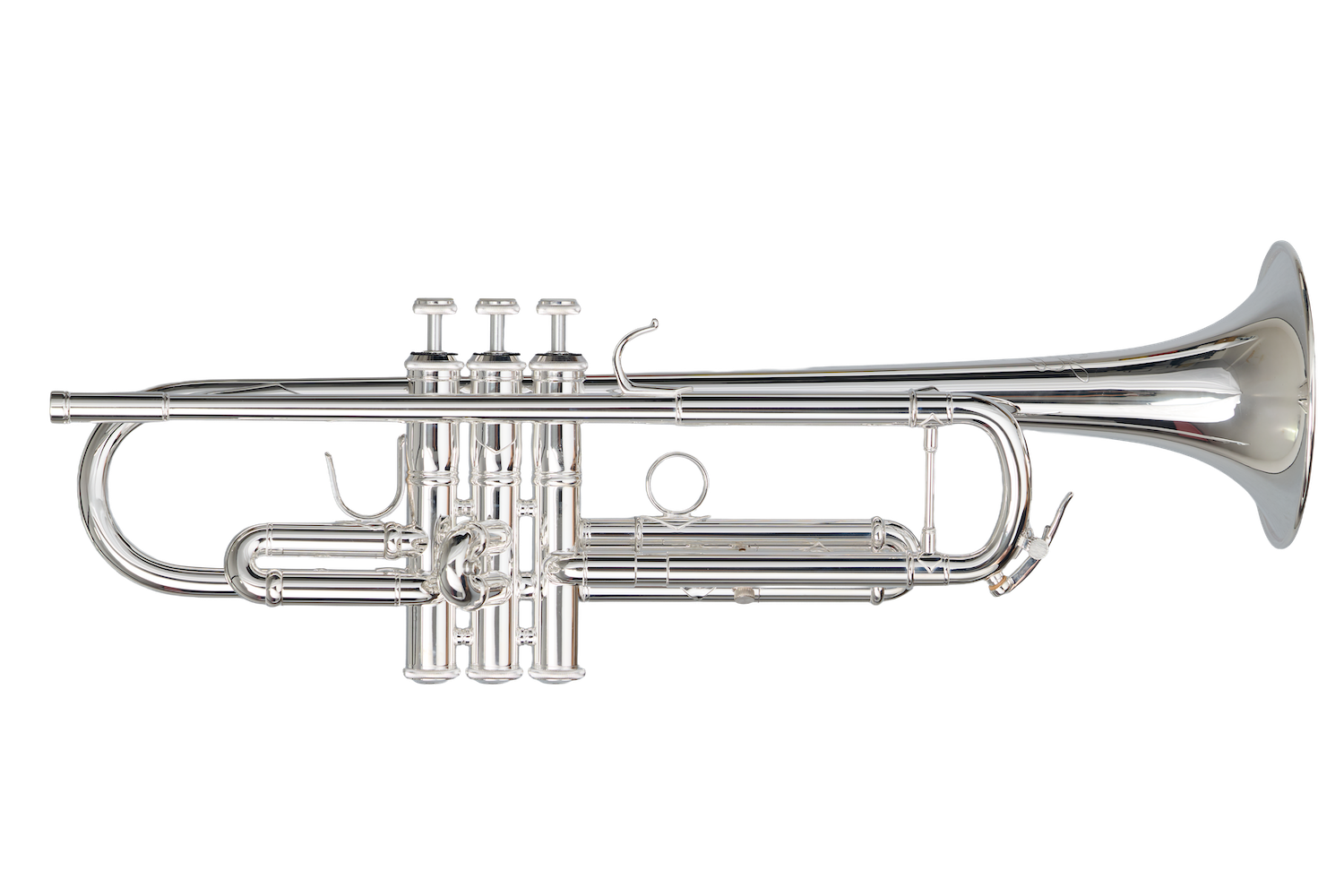

Trumpet Interval Exercises from Beginner to Advanced
Beginners
Exercises
1. Simple Intervals
- Exercise Example: Start with a concert B-flat scale and work with intervals like minor seconds (B-flat to B) and major seconds (B-flat to C). Play each note for four counts, ensuring a smooth transition.
- Method: Use a tuner to check intonation and focus on steady airflow.
2. Slurred Intervals
- Exercise Example: Play intervals within a perfect fifth range (B-flat to F) slurred. Start with whole notes, then progress to half notes.
- Method: Keep the embouchure steady and focus on smooth airflow, avoiding any hint of tongue placement.
3. Tongued Intervals
- Exercise Example: Work on the same intervals but use a legato tongue. For instance, B-flat to D, B-flat to E-flat
- Method: Use a metronome set at a slow tempo (60bpm) to maintain a consistent rhythmic pulse. Aim for light, separated articulation to build precision without muscle strain.
Purpose
- Embouchure Stability: Beginners learn how to form and maintain a correct embouchure, emphasizing consistency.
- Aural Skills: Start developing the ability to distinguish and internalize small interval distances, crucial for playing in tune.
Intermediate Players
Exercises
1. Expanding Range
- Exercise Example: Practice ascending and descending intervals within a scale across two octaves. For instance, B-flat scale intervals: B-flat-D-F-B-flat-D-F (up two octaves and back down).
- Method: Use a tunable drone in the key of B-flat to ensure each interval is in tune with itself.
2. Mixed Intervals
- Exercise Example: Play through patterns involving thirds, fourths, and fifths, such as B-flat-D-F-D-B-F-D-B-flat.
- Method: Alternate between slurred and tongued notes to build both flexibility and articulation control.
3. Melodic Intervals
- Exercise Example: Use simple melodies like “Mary had a Little Lamb” or “Twinkle Twinkle Little Star” or “Ode to Joy,” emphasizing the interval jumps and playing them in different keys.
- Method: Practice the melody by ear first, and then use sheet music to ensure accuracy. Try transposing to different keys to develop adaptability.
Purpose
- Embouchure Flexibility: Intermediate players enhance their ability to control embouchure adjustments through wider interval leaps.
- Aural Skills: Players train their ears to handle more complex intervals, helping with intonation and musicality.
Advanced Players
Exercises
1. Complex Intervals and Range
– Exercise Example: Practice scales in thirds, fourths, and fifths across the complete range of the trumpet.
Example: Start from low C to high C in thirds.
– Method: Use various tonguing techniques (single, double, triple tonguing) to maintain agility. In addition, add short and long articulations.
2. Interval Patterns and Chords
- Exercise Example: Practice intervallic patterns such as whole tone scales and diminished scales: C-D-E-F#-A-flat-B-flat-C.
- Method: Integrate arpeggios and scales in all keys, using etudes by composers like Arban or Charlier for advanced technique building.
3. Harmonics and Overtones
- Exercise Example: Play the harmonic series on different fundamental tones, focusing on clean embouchure shifts. Start on a low C and progressively reach the higher harmonics: C-G-C-E-G-B-flat-C. Practice in all keys.
- Method: Work on controlling dynamic changes (pp to ff) within the intervals to refine embouchure control, endurance and intonation.
Purpose
- Embouchure Control and Strength: Advanced exercises push the embouchure’s limits, building strength and precise control over a wide register with superior intonation.
- Aural Skills: Mastering complex intervals fine-tune the ear’s ability to distinguish pitches with great accuracy, crucial for professional-level playing and advanced musical interpretation.
Overall Importance of Interval Practice
1. Embouchure Development
- Support and Consistency: Regular interval practice promotes muscle memory, ensuring consistent embouchure settings across registers.
- Flexibility and Endurance: Enhances the ability to handle sudden leaps and maintain a stable sound, critical for longer performance and endurance.
2. Ear Training
- Pitch Discrimination: Training the ear to recognize and produce accurate intervals helps prevent issues with intonation and blends better within ensembles and different instrument.
- Musical Context: Understanding and hearing intervals in different harmonic and melodic contexts improves sight-reading, transposition, and improvisational skills.
Ultimately, interval practice should be a daily routine for any trumpet player, adjusted in complexity according to their skill level, to continuously support embouchure development and refine their aural abilities.